
What Is Groundwater? instructional video by KQED QUEST
THE MIAMI VALLEY BURIED AQUIFER
DESIGNATED SOLE SOURCE AQUIFER
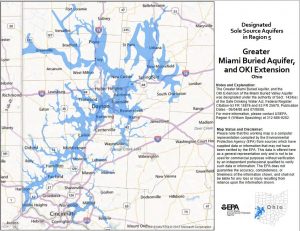
-
What is a sole source aquifer?
A sole source aquifer is an underground water supply designated by the EPA as the “sole or principal source” of drinking water for an area.
-
How many SSAs are there?
As of June 2013, 80 SSAs are listed nationwide.
In Region 5, there are six SSAs: one in Indiana, one in Minnesota, and four in Ohio. There are no designated SSAs in the Illinois, Michigan, or Wisconsin.
-
What criteria have to be met for a designation?
Based on the statutory language, major criteria to be considered by EPA are whether the aquifer is the sole or principal source of drinking water and whether contamination of the aquifer would create a significant hazard to public health.
EPA has further interpreted “sole or principal source” to mean that the aquifer must supply at least 50 percent of the drinking water to persons living over the aquifer, and that there should be no alternate and feasible sources of drinking water that could replace the aquifer.
PUMPING CAN AFFECT THE LEVEL OF THE WATER TABLE
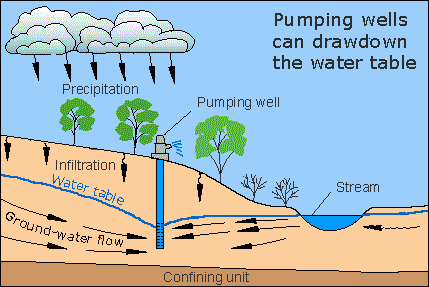 Groundwater occurs in the saturated soil and rock below the water table. If the aquifer is shallow enough and permeable enough to allow water to move through it at a rapid-enough rate, then people can drill wells into it and withdraw water. The level of the water table can naturally change over time due to changes in weather cycles and precipitation patterns, streamflow and geologic changes, and even human-induced changes, such as the increase in impervious surfaces on the landscape.
The pumping of wells can have a great deal of influence on water levels below ground, especially in the vicinity of the well, as this diagram shows. If water is withdrawn from the ground at a faster rate that it is replenished, either by infiltration from the surface or from streams, then the water table can become lower, resulting in a “cone of depression” around the well. Depending on geologic and hydrologic conditions of the aquifer, the impact on the level of the water table can be short-lived or last for decades, and it can fall a small amount or many hundreds of feet. Excessive pumping can lower the water table so much that the wells no longer supply water—they can “go dry.”